
Towing Service Secrets: What Your Neighbors Aren’t Telling You
Most people only think about calling a towing service in Charlotte when they’re already standing on the side of the road, frustrated, and completely unprepared. That’s the dirty little secret nobody talks about — the drivers who handle these situations calmly and get back on their way fast aren’t just lucky. They know things. They’ve done their homework, or they’ve been through it before and learned the hard way. This article is about skipping that painful learning curve entirely.
The Call You Make First Makes All the Difference
Here’s something most drivers get wrong: they call whoever shows up first in a search result without asking a single question. Then they’re surprised when the bill is twice what they expected, or the truck that shows up isn’t equipped for their vehicle type.
Before you confirm any dispatch, ask three things. First, is the company local? A locally based crew knows Charlotte’s roads — the shortcuts, the tricky interchange ramps on I-85, the spots where a standard truck can’t safely maneuver. Second, are they licensed and insured? This isn’t paranoia. If a driver damages your car during a tow and they’re operating without proper coverage, you’re absorbing that cost. Third, get a price estimate before they arrive, not after.
Drivers who’ve used Charlotte towing services more than once often say the same thing: the companies worth calling are the ones who answer these questions without hesitation. The ones who dodge them? That’s your answer right there.
Your Car Isn’t Just a Car — It’s a Variable
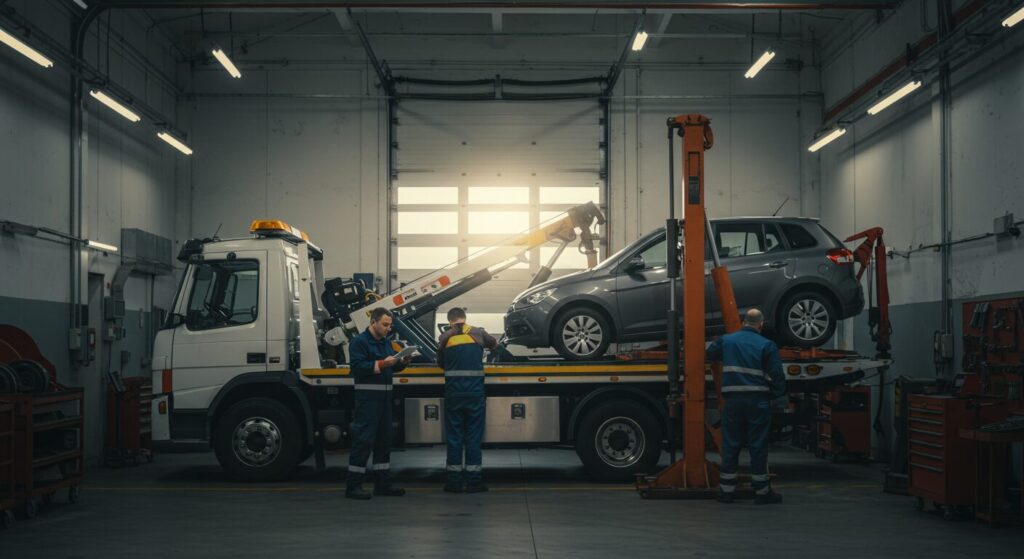
Not every tow truck handles every vehicle. This is one of those things that sounds obvious once you hear it, but most people have never considered it. A flatbed is ideal for all-wheel-drive and four-wheel-drive vehicles. A wheel-lift truck works fine for standard front or rear-wheel-drive cars in certain situations. But put the wrong equipment on the wrong vehicle and you’re looking at transmission damage, drivetrain problems, or worse.
If you drive an AWD crossover, a luxury vehicle, a low-clearance sports car, or a lifted truck, mention that when you call. A reputable operator will ask anyway — but not all of them do. Don’t assume they’ll figure it out when they arrive. Be specific upfront.
This also applies to motorcycles, RVs, and commercial vehicles. Specialty rigs require specialty equipment, and not every company in the area carries it. Knowing this before you’re stranded means you’re calling the right people from the start instead of waiting an extra hour for a second truck after the first one shows up unprepared.
If you want a deeper look at what separates good operators from the rest, the post on why choosing local matters for Charlotte residents breaks it down well.
Roadside Assistance and Towing Are Not the Same Thing
A lot of drivers assume their roadside assistance coverage through their insurance or a membership program covers everything. It often doesn’t — or it covers it with conditions that make the process slower and more complicated than just calling directly.
Many roadside programs have mileage caps on tows. They’ll cover you for five or ten miles, but if you need to get your car across town to a specific shop, you’re paying out of pocket for the rest. Some programs also have slow dispatch times because they’re routing calls through a national call center that then contacts a local provider anyway. You’re essentially adding a middleman to an already stressful situation.
Knowing the actual terms of your coverage before something goes wrong is one of the smartest things you can do as a driver. Pull up your policy tonight, not at 11 p.m. on a Tuesday when your car won’t start in a parking deck on South Boulevard.
There’s also a meaningful difference between a jump start, a tire change, a lockout, and a full tow. Experienced providers handle all of these, but each one is a different service with different pricing. Understanding that distinction means you’re not caught off guard when you get the invoice.
The Hidden Advantage of Building a Relationship Before You Need One
This is the thing your neighbors who always seem calm in a breakdown situation actually know. They’ve already identified a reliable local provider. They have the number saved. They know roughly what to expect in terms of response time and cost. When something goes wrong, they’re not scrambling — they’re just making a phone call.
Charlotte’s road network is busy. Between the Uptown corridors, the I-277 loop, and the constant construction reshaping major arteries, breakdowns happen in complicated spots. A provider who operates locally and knows the city well is going to reach you faster and handle the situation more smoothly than a national chain dispatching from a database.
Many people who’ve used a trusted Charlotte towing company describe the experience the same way — what made the difference wasn’t just the speed, it was the fact that the driver arrived knowing exactly where they were and what the situation called for. That kind of local knowledge isn’t something you can replicate with a GPS pin and a call center.
Save the number before you need it. Know your vehicle type and what equipment it requires. Understand your coverage. Ask the right questions before you confirm a dispatch. These aren’t complicated steps — they’re just the ones most people skip until they’ve already had a bad experience. Don’t be that driver.
Frequently Asked Questions About Towing Service
How long will it take for a tow truck to reach me in Charlotte?
Response times in Charlotte can vary depending on your location and current traffic conditions, but most local towing companies aim to arrive within 30 to 45 minutes. If you’re stranded on a busy road like I-485, I-77, or Independence Boulevard during rush hour, it may take slightly longer due to heavy congestion. Calling a locally based Charlotte towing company rather than a national dispatch service can often get you faster response times since their drivers are already in the area.
How much does a tow truck service typically cost in Charlotte, NC?
In Charlotte, the average cost of a tow usually starts around $75 to $125 for a local tow of up to 5 miles, with additional per-mile charges after that, typically ranging from $2 to $4 per mile. Prices can also vary based on the type of vehicle being towed, the time of day, and whether special equipment is needed. It’s always a good idea to ask for a quote upfront before agreeing to the service to avoid any surprise charges on your bill.
What should I do while waiting for a tow truck after breaking down on a Charlotte highway?
If you break down on a major Charlotte highway like I-85 or I-277, the first thing you should do is safely move your vehicle as far onto the right shoulder as possible and turn on your hazard lights immediately. Stay inside your vehicle with your seatbelt fastened if it’s safe to do so, especially on high-speed roadways where passing traffic can be dangerous. Place road flares or reflective triangles behind your vehicle if you have them, and keep your phone charged so you can communicate your exact location to the towing company.
Does my car insurance or roadside assistance plan cover towing in Charlotte?
Many auto insurance policies in North Carolina include optional roadside assistance coverage that can cover or significantly reduce the cost of a tow in Charlotte. It’s worth checking with your insurer before calling a tow truck, as you may only owe a small copay or nothing at all depending on your plan. Programs like AAA, as well as coverage offered through providers like State Farm, GEICO, and Progressive, are widely used in the Charlotte area and can be activated with a simple phone call or through a mobile app.
Can a Charlotte towing company tow my car to any repair shop I choose?
Yes, in most cases a towing company in Charlotte will tow your vehicle to any repair shop you specify, whether that’s a dealership in Uptown Charlotte, a mechanic in Ballantyne, or a shop in Matthews or Huntersville. It’s important to communicate your preferred destination clearly when you call for service so the driver knows exactly where to take your vehicle. Keep in mind that longer distances to your chosen shop may result in higher towing fees, so it helps to have a repair shop in mind before you make the call.